FUNZIN Participates in the 'Army TIGER+' Training! Funzin Newsletter – October 2026 |
|
|
🚀 FUNZIN, the AIoT specialist moving forward with joy, brings you our September updates! 😁
Hello, this is FUNZIN!
In this month’s newsletter, we are excited to share the latest news and achievements from across FUNZIN.
As a Vertical AI specialist, FUNZIN will continue to lead innovation for the future of national security and defense.
We appreciate your continued interest and support, and if you found this newsletter helpful, please subscribe and share it with your colleagues and friends! |
|
|
Field-Validated AI Staff — Army TIGER+ Training |
|
|
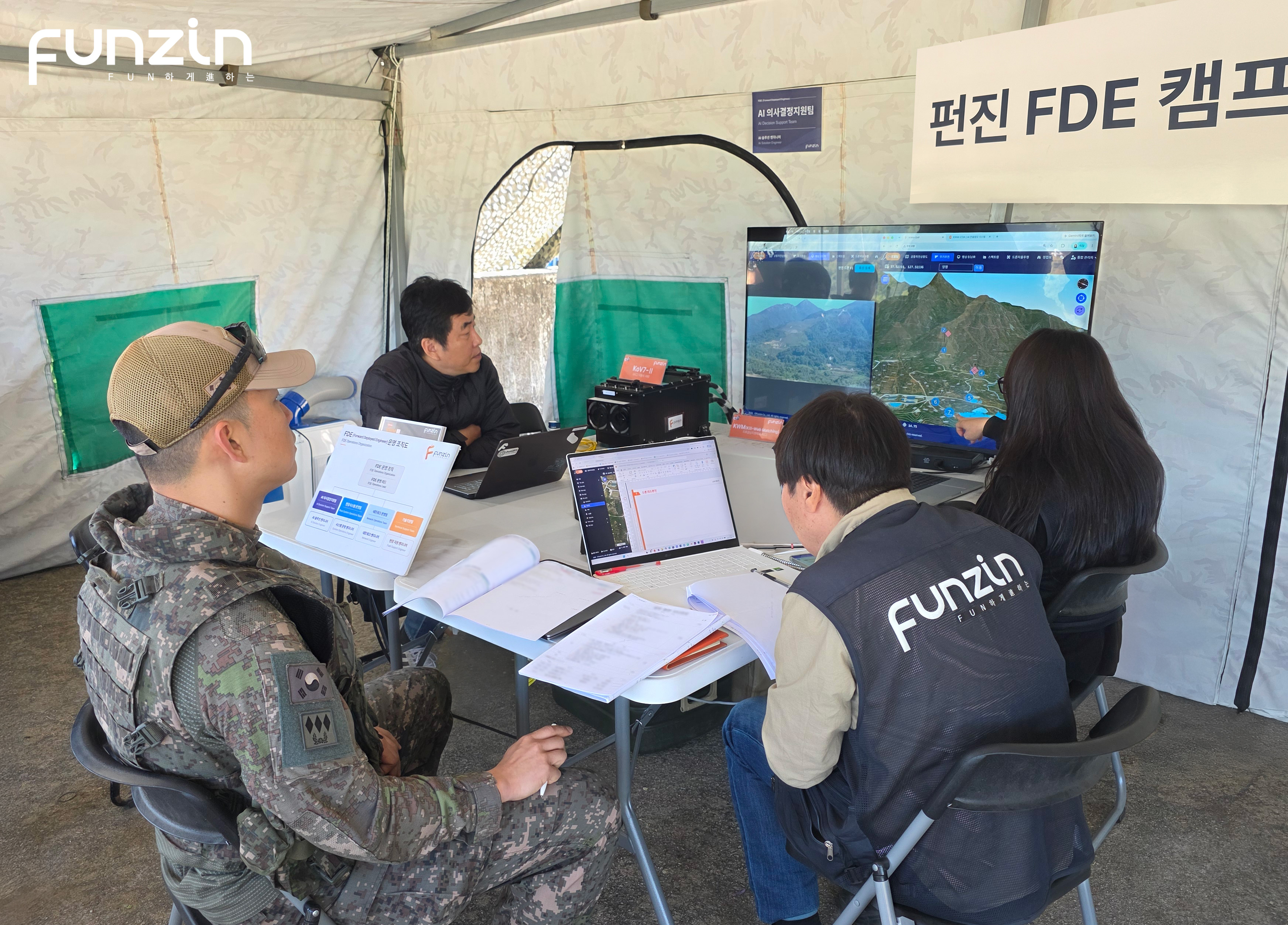
FUNZIN’s dedicated Forward Deployed Engineering (FDE) team supports military operators in using KWM during the Army TIGER+ exercise.
|
|
|
On October 14, FUNZIN operated KWM, its AI command decision-support system, during the Army TIGER+ integrated combat training exercise for future warfare at the Yangpyeong Comprehensive Training Ground in Gyeonggi Province, South Korea. We deployed both the cloud-based KWM-CL and KWM-onP, an edge-cloud solution for mobile command posts. The systems consolidated target information from reconnaissance assets and supported commanders’ decisions by recommending courses of action and available assets suited to the battlefield situation.
Our dedicated FDE team worked alongside military operators from preparation through repeated training sessions, addressing system operation, network connectivity, and equipment integration issues. Using an agile development approach, we rapidly incorporated findings from training and military requirements into system improvements. By deploying development personnel, test equipment, and communications infrastructure to the site, we continued iterative field validation.
FUNZIN emphasized the need to connect early adoption through rapid acquisition programs, unit-level trials, and continuous technological improvement with follow-on military fielding. We also identified two priorities: establishing a military–industry technology cooperation framework that supports continuous operation in both peacetime and wartime, and ensuring the safety of civilian FDE personnel. Building on these foundations, we will contribute to sovereign defense AI that the Republic of Korea Armed Forces can operate and further develop independently. |
|
|
Showcasing K-Defense AI in the U.S. — Highlights from AUSA 2026 |
|
|
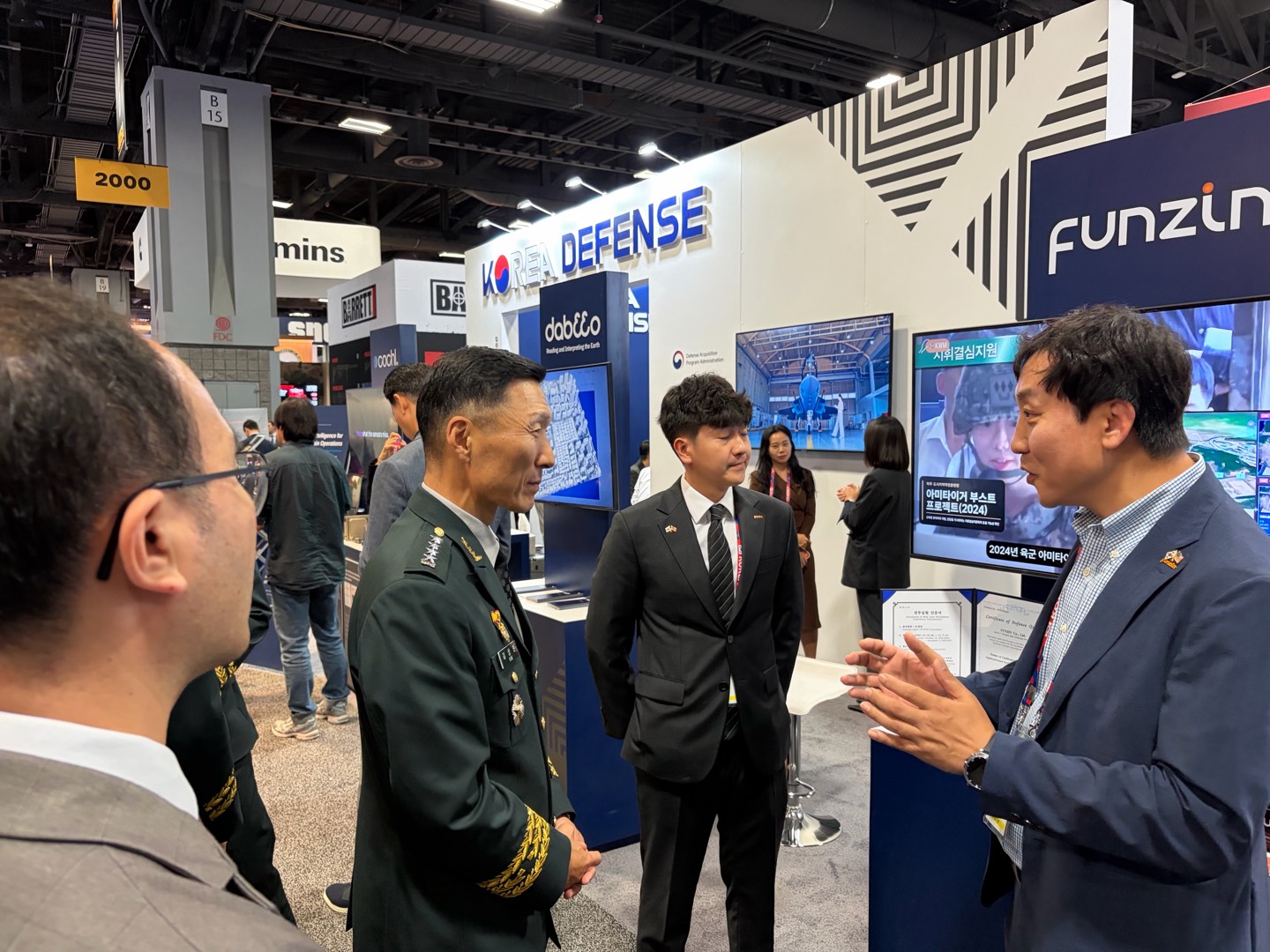
The Deputy Commander of the ROK–U.S. Combined Forces Command (left) with FUNZIN CTO Shin Seung-hoon (right) at FUNZIN’s booth in the Korea Pavilion at AUSA 2026.
|
|
|
FUNZIN brought experience gained through combat experiments and unit-level field trials with the Republic of Korea Armed Forces to the U.S. defense market. At AUSA 2026, held in Washington, D.C., on October 12–14, we showcased our defense AI portfolio, including KWM-onP, an AI command-and-control (AIC2) solution for command posts, and KWM-Ocelot, a radio-frequency (RF) spectrum analysis system.
KWM-onP runs KWM locally even when network connectivity with higher-echelon command posts is lost, supporting commanders’ situational assessment and decision-making. KWM-Ocelot detects and analyzes radio-frequency signals in the surrounding environment to help identify potential threats that are difficult to observe directly. At the exhibition, we received sustained interest and inquiries about offline AI operation in communications-constrained environments and RF-spectrum-based threat detection.
Also on display were KWM-stA, which supports mission execution across multiple types of unmanned systems, and EagleEye, which generates and manages synthetic data for AI training in closed-network environments. Drawing on operational experience gained in Korean military settings and demand identified at the exhibition, FUNZIN will pursue concrete opportunities for joint projects and technology collaboration with U.S. defense companies and government and military stakeholders. |
|
|
AI Goes to Space — Expanding the Applications of KWM-Hepa |
|
|
An illustration of the in-space demonstration of satellite health-monitoring AI based on KWM-Hepa technology.
|
|
|
FUNZIN’s AI, developed to monitor equipment health, is now operating aboard a satellite. Our technology was integrated into Space LiNK’s BEE-1012 CubeSat, launched aboard the Nuri rocket on its fifth flight on October 7. By applying expertise developed through KWM-Hepa, our AI predictive maintenance solution, to satellite health monitoring, FUNZIN has begun its first in-space demonstration of AI capabilities built in defense and industrial environments.
Progress continued after deployment. During communications testing on October 20, a link was successfully established between the satellite and the ground station. We also confirmed normal operation of the AI module on the satellite’s AI onboard computer (AIOBC) and verified the ability to change its AI model. These initial results provide early evidence that AI can be run and operated in space. They establish a foundation for validating technology that enables satellites to monitor their own health.
Direct access for equipment inspections is difficult in space, and opportunities for communication with ground stations are limited. AI that detects anomalies in health data can help satellites carry out their missions reliably. Through collaboration among Korean companies and institutions, this project extends predictive maintenance technology into the aerospace sector.
Next, we plan to progressively validate fault detection, isolation, and recovery (FDIR) functions using actual satellite operational data. While improving the reliability of satellite health-monitoring technology, we will expand the use of on-device AI to support reliable mission execution across defense and aerospace platforms. |
|
|
Collaborating with the ROK Army Training and Doctrine Command to Advance Future Warfare Capabilities |
|
|
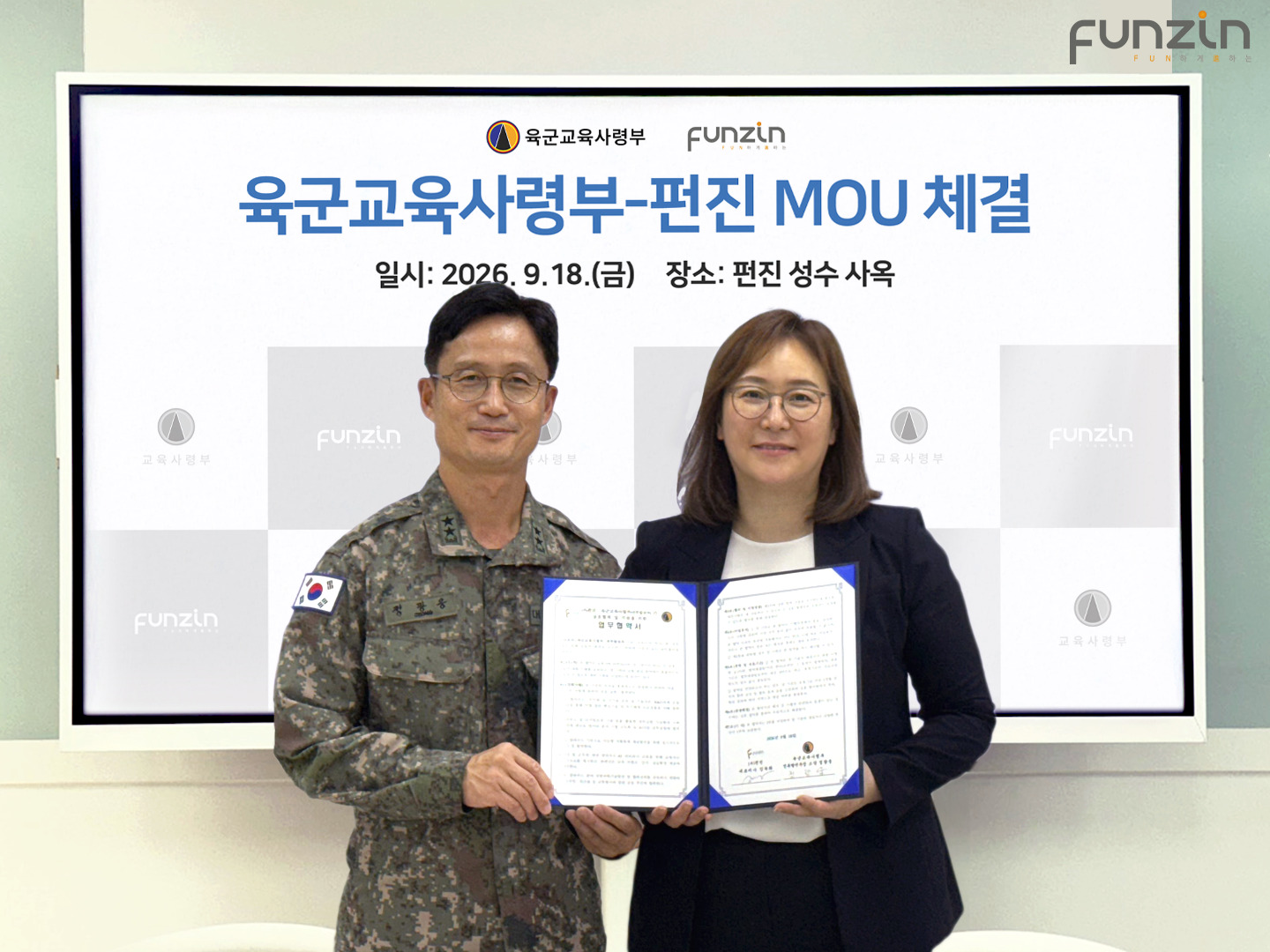
Jeong Gwang-ung, Head of the Combat Development Department at the ROK Army Training and Doctrine Command, and FUNZIN CEO Shirly following the MOU signing.
|
|
|
FUNZIN and the ROK Army Training and Doctrine Command are joining forces on research and experimentation for future combat development, alongside AI education for military personnel. On September 18, FUNZIN signed a memorandum of understanding (MOU) with the command’s Combat Development Department. The two sides agreed to exchange technologies in AI, cloud computing, and unmanned systems, and to collaborate on research and development and AI-enabled combat experiments addressing evolving battlefield needs. The agreement creates an ongoing channel connecting military requirements with private-sector development experience.
The partnership also focuses on the capabilities of the people who will use these technologies. Planned activities include AI and cloud computing education for service members and civilian defense personnel, as well as seminars and workshops to exchange knowledge and experience. Beyond introducing new technologies, the collaboration aims to strengthen military personnel’s understanding and ability to use them.
In developing defense AI technologies such as KWM, FUNZIN has incorporated feedback from combat experiments and military exercises into its products. This agreement provides a foundation for sharing that experience with the command and jointly exploring future research topics and testing priorities. The partnership will connect military requirements to development, and lessons from testing to education and follow-on research. By linking joint research, combat experimentation, and AI skills development, the two sides will advance both technology readiness and operator preparedness. |
|
|
Tech Report: Exploring FUNZIN’s Technology Through an ICTC Outstanding Paper |
|
|
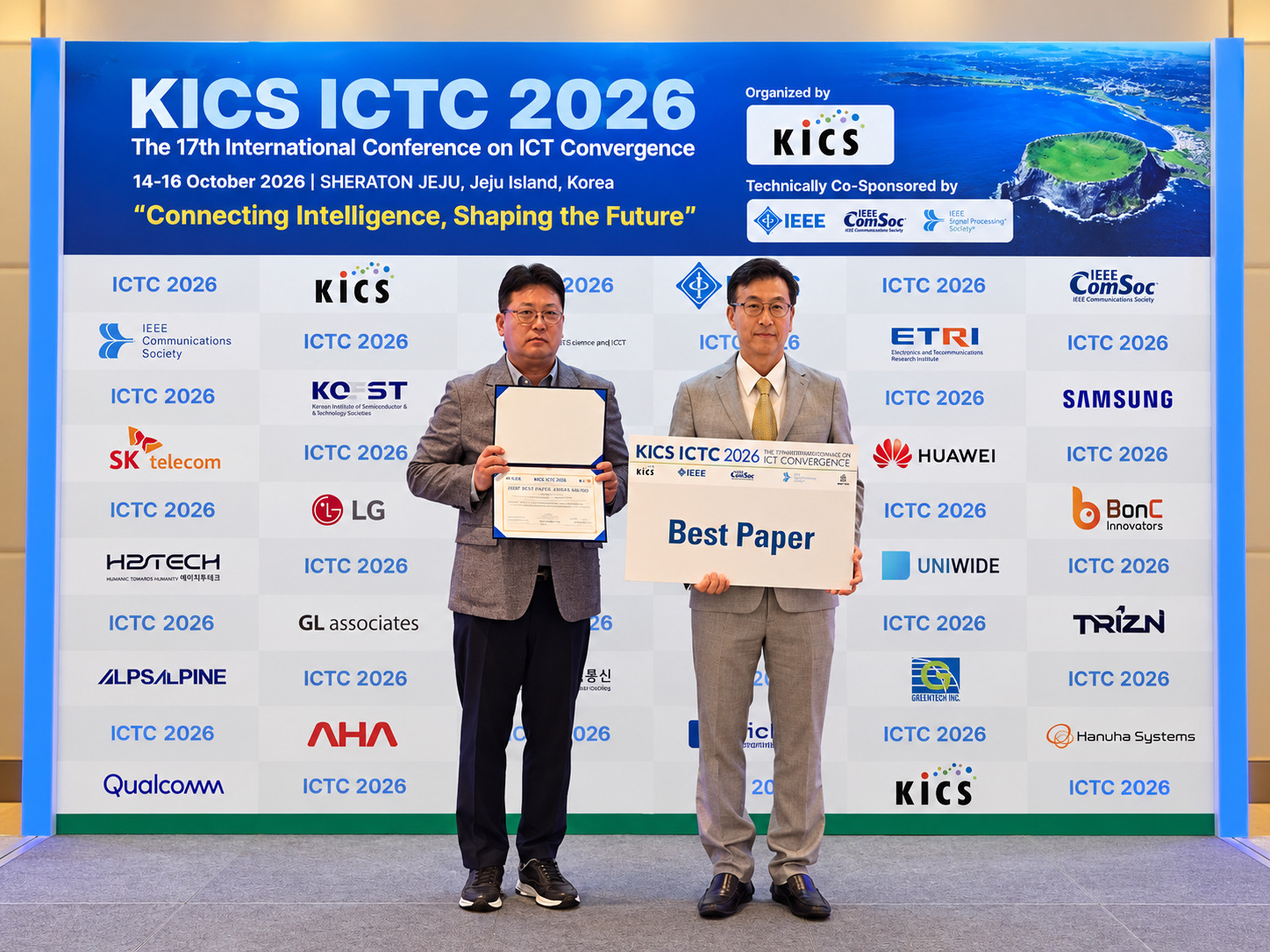
Min Kam (left), Head of FUNZIN’s 6G Business Division, accepts a Best Paper Award in the workshop category on behalf of FUNZIN at ICTC 2026.
|
|
|
FUNZIN received a Best Paper Award in the workshop category at ICTC 2026 for its research on drone-based RF emitter geolocation. The study uses a ground–air collaborative approach: a ground-based direction-finding (DF) vehicle provides an approximate location, and an unmanned aerial vehicle (UAV) conducts a close-range search, combining position data with received signal strength indicator (RSSI) measurements to estimate the emitter’s coordinates.
At the core of the method is Top-K RSSI weighted-centroid estimation. It selects the K strongest signal measurements, converts received power from dBm to mW, and uses those power values to weight the coordinates of each measurement point. This reduces the influence of weak signals measured farther away, which can pull the estimated location outward. The method does not require a trained model, keeping computational demands low. The study also compared spiral, ribbon, and hybrid flight patterns to analyze how search trajectories affect localization performance.
Analysis of logs from eight flights showed an approximately 25% reduction in average localization error compared with the baseline method. The reduction was approximately 66% for wide-area ribbon-pattern searches. These results come from offline log analysis involving a single fixed transmitter in open terrain; real-time onboard estimation and validation in more complex RF environments remain future work. FUNZIN plans to apply the findings to improve KWM-Ocelot’s geolocation capabilities and its integration with KWM-onP. |
|
|
FUNZIN's Milestones in the AI Industry |
|
|
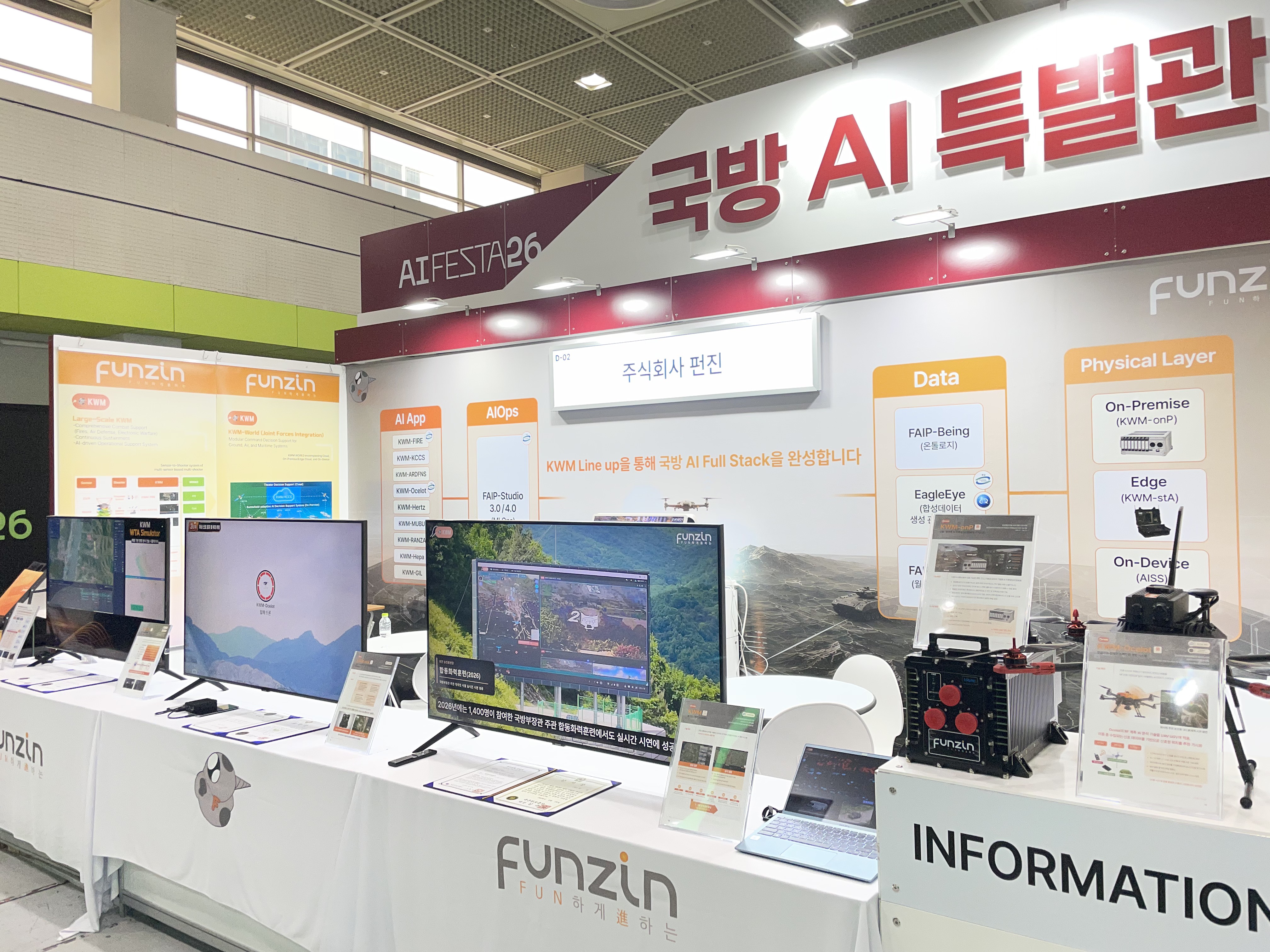
AI Festa 2026: Advancing AI Staff Capabilities Through Virtual Battlefield Experience (October 6–8, 2026 | COEX, Seoul)
FUNZIN participated in the Defense AI Special Pavilion at AI Festa 2026, held at COEX in Seoul.
We presented our approach to enhancing KWM using world models and our proprietary simulator to learn from and assess battlefield scenarios that are difficult to reproduce repeatedly in the real world.
The goal is to complement field experience with virtual battlefield experience, strengthening the decision-support capabilities of our AI staff system.
|
|
|
KPEX 2026: Bringing Military-Validated AI to the Future of Public Safety (October 21–24, 2026 | Songdo Convensia, Incheon)
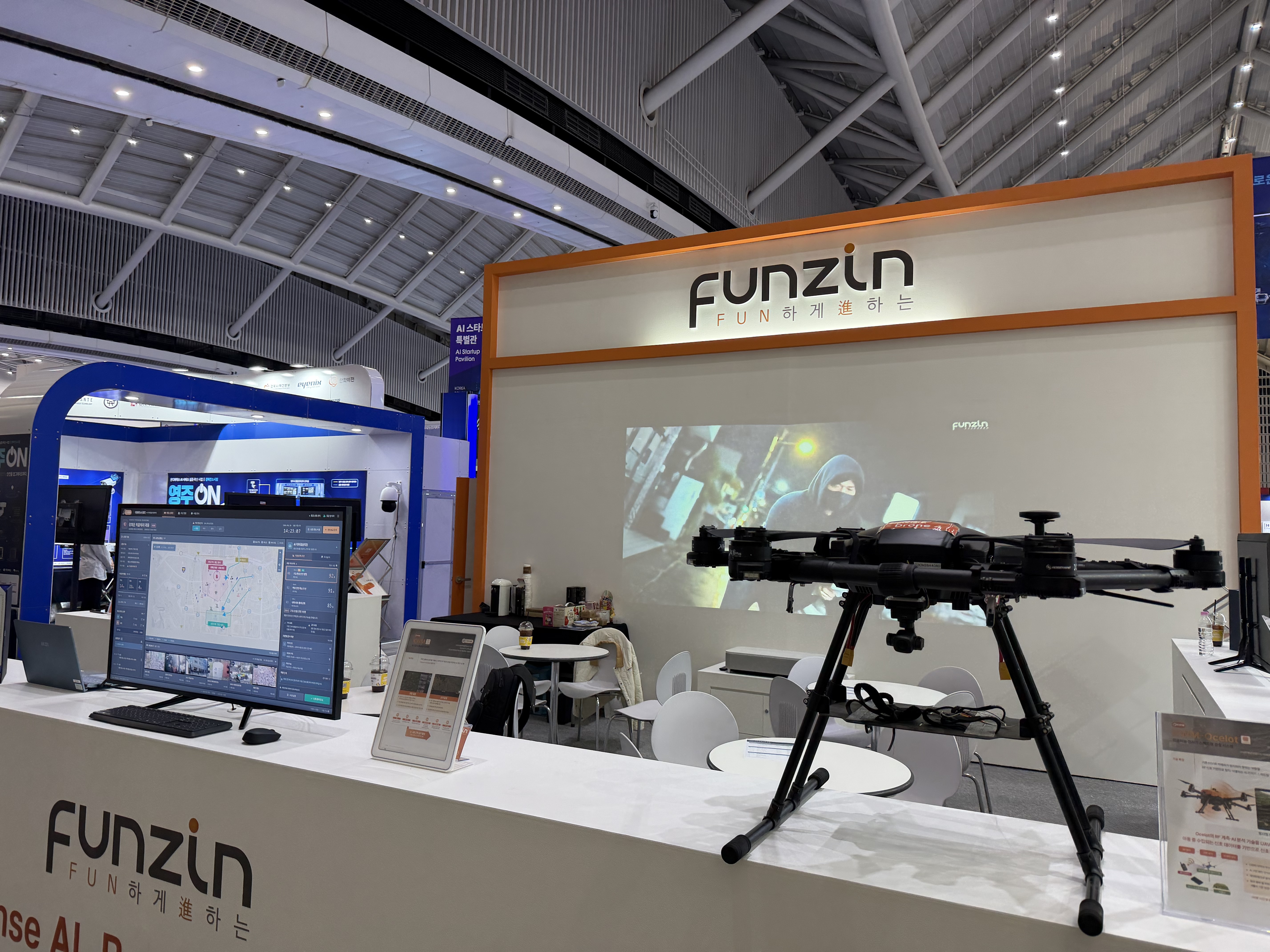
FUNZIN returned to KPEX for the second consecutive year, presenting ways to apply military-validated AI to public safety.
We introduced scenarios for information sharing and coordinated responses between police and fire services, alongside methods for detecting illegal communications equipment used in voice-phishing scams.
The exhibition demonstrated how our experience in battlefield situational awareness and command support can contribute to everyday public safety.
|
|
|
CEO Shirly Joins Seocho-gu’s Efforts to Build an AI Industry Ecosystem (October 1, 2026 | Seocho-gu Office, Seoul)
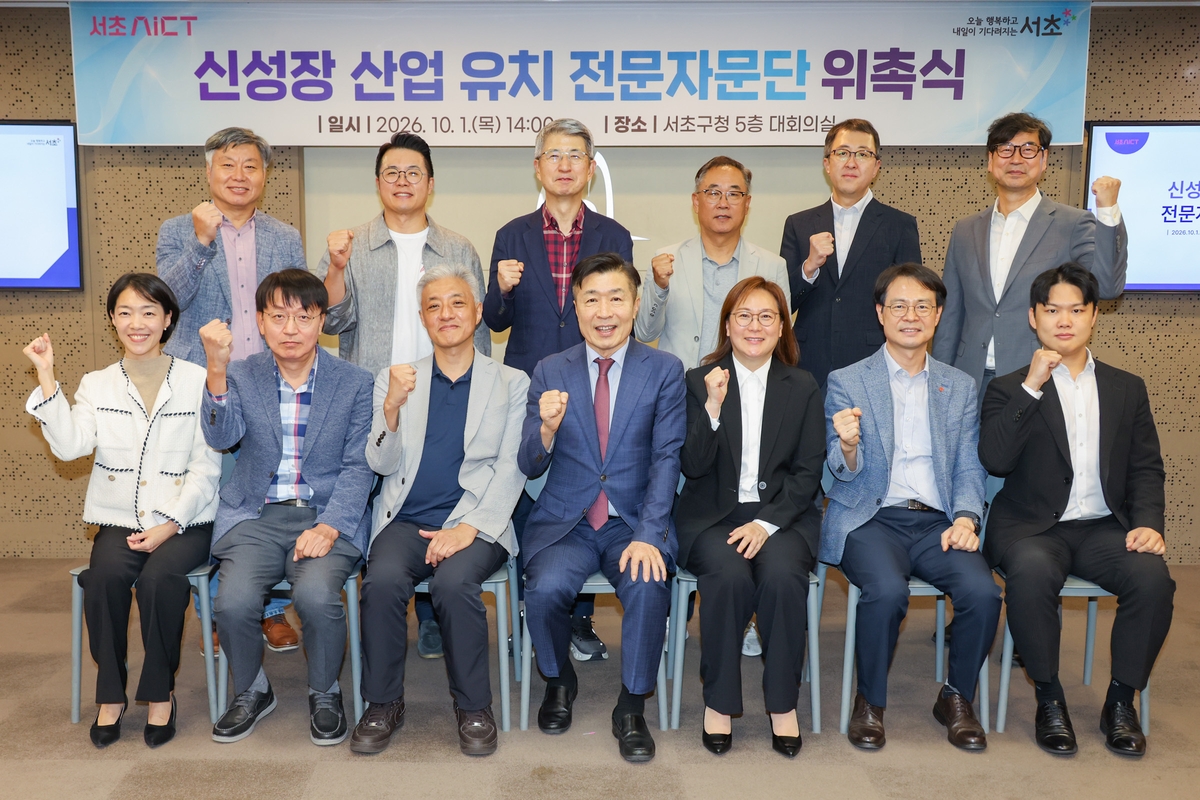
FUNZIN CEO Shirly has been appointed to Seocho-gu’s expert advisory group on attracting emerging industries.
Shirly will advise on attracting AI companies, supporting their growth, and addressing the challenges they face.
Drawing on experience in AI commercialization and real-world deployment, Shirly will help inform local policies to foster businesses and support industry development.
|
|
|
펀진
🏠 서울특별시 성동구 연무장5가길 7, 현대테라스타워 EAST동 13층
☎️ 02-929-9579~80
|
|
|
|
|